
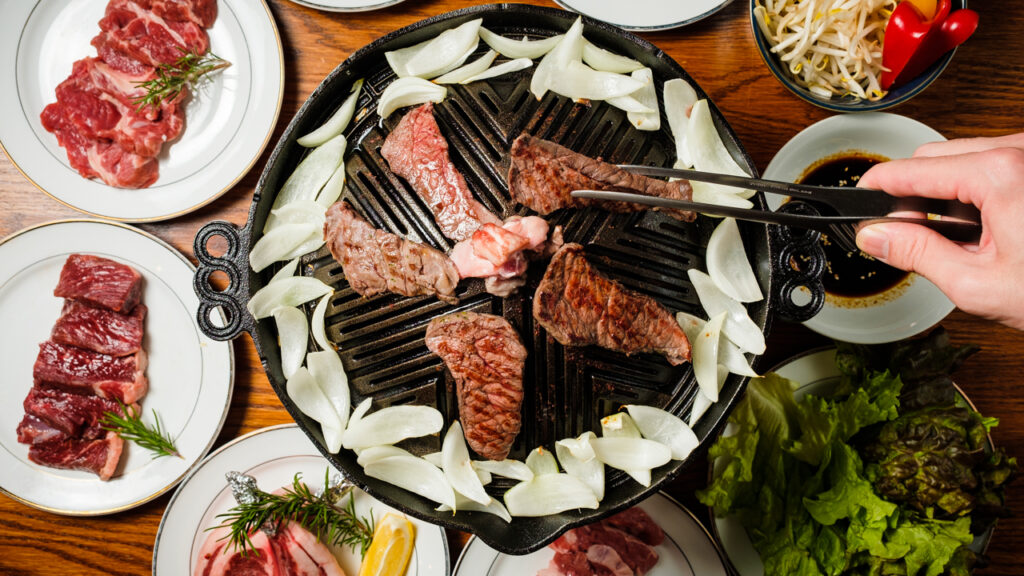
“What kind of meat is Jingisukan?”
“Are lamb and Jingisukan the same thing?”
“How is it different from regular yakiniku?”
Even if you know the name, Jingisukan can be surprisingly difficult to explain when someone asks what it actually is.
At Hitsuji Gumi, the sheep-meat specialty brand behind “Azabu no Hitsuji” and “Ichigaya no Hitsuji,” we often hear questions like these from guests trying Jingisukan for the first time.
The first thing to understand is simple: lamb is a type of meat, while Jingisukan is the name of a dish.
Jingisukan is generally known as a dish in which sheep meat, such as lamb or mutton, is grilled together with vegetables. It has become one of Hokkaido’s best-known food traditions.
Japan’s Ministry of Agriculture, Forestry and Fisheries also introduces Jingisukan as a local Hokkaido dish made with sheep meat and vegetables.
| Frequently asked question | Answer |
|---|---|
| What is Jingisukan? | A dish generally made by grilling sheep meat and vegetables |
| What meat is used? | Mainly sheep meat such as lamb and mutton |
| How is it different from lamb? | Lamb is the meat; Jingisukan is the dish |
| Is lamb game meat? | No. Lamb sold for food is generally meat from sheep raised as livestock |
| How is it eaten? | Two common styles are marinated meat and meat grilled plain then seasoned when eaten |
| Do you need a special pan? | A domed Jingisukan pan is traditional, but the dish is not defined by the pan alone |
Jingisukan does not mean lamb.
“Sheep meat” is the ingredient. “Jingisukan” is the dish.
What Is Jingisukan? What Meat Is Used?
The meat used for Jingisukan is sheep meat.
Sheep meat has several names depending on the animal’s stage of growth. The best known are lamb and mutton, while the stage between them is sometimes called hogget.
The important distinction is that lamb, hogget and mutton describe the meat, while Jingisukan describes the dish.
Jingisukan can be made with lamb.
It can also be made with mutton.
The tenderness, aroma and depth of flavor change depending on the sheep being used.
For a detailed comparison of lamb, hogget and mutton, see our related article below.
Is Lamb Game Meat?
No. Lamb is not game meat.
Japan’s Ministry of Health, Labour and Welfare uses the term game meat for meat from hunted wild animals such as deer and wild boar.
Lamb that is commonly sold for food comes from sheep raised as livestock.
For people who are not familiar with sheep meat, the thought process can sometimes be:
“An unusual meat that is different from beef, pork or chicken”
↓
“Is it game?”
But sheep are livestock raised for meat around the world.
Jingisukan Comes in Marinated and After-Grilling Styles
There is more than one way to enjoy Jingisukan.
Two common styles are especially well known.
| Item | Marinated Jingisukan | Seasoned after grilling |
|---|---|---|
| Before grilling | Meat is marinated in sauce | The meat itself is grilled without being marinated |
| When eating | Enjoy the seasoning already absorbed into the meat | Eat with sauce, salt or other seasonings |
| Character | Meat and sauce come together as one flavor | Easier to notice differences between sheep and cuts |
The Ministry of Agriculture, Forestry and Fisheries also describes these two styles in Hokkaido: grilling the meat first and dipping it in sauce, or grilling meat that has already been marinated.
Neither style is more “correct” than the other.
Marinated Jingisukan has its own appeal, with the sauce and meat blending together as they cook.
On the other hand, grilling the meat first and seasoning it afterward makes it easier to compare the aroma, fat and character of different sheep and cuts.
At Hitsuji Gumi, we mainly use the latter style, serving sheep meat with salt and our house-made sauce.
When we want guests to notice the character of the sheep itself, such as with certain domestic sheep, we may recommend trying the first bite with salt.
Even within Jingisukan, the style of a restaurant changes depending on what it wants guests to taste first.
How Is Jingisukan Different from Yakiniku?
Jingisukan is also a form of grilled meat, so there is no simple line where “yakiniku ends and Jingisukan begins.”
Still, Jingisukan has some distinctive characteristics.
The main ingredient is sheep meat.
A traditional way of eating it is to grill vegetables alongside the meat, using the fat and juices released from the sheep.
The difference is not simply whether a special pan is used.
One of the defining features of Jingisukan is the food culture built around enjoying sheep meat together with its fat and vegetables.
That is why, even though both involve grilling meat, the experience is quite different from beef-centered yakiniku.
Why Is the Jingisukan Pan Dome-Shaped?
When many people picture Jingisukan, they think of the distinctive pan with a raised center.
That shape has a purpose.
The meat is grilled on the raised center, while vegetables cook around the lower outer area.
Fat and juices from the sheep run down the slope of the pan and help flavor the vegetables.
The Ministry of Agriculture, Forestry and Fisheries also describes this structure: meat is grilled in the center, vegetables around it, and the meat juices add flavor to the vegetables.
Onions and bean sprouts cooked with sheep fat taste different from vegetables grilled on their own.
So the domed pan is not just visually distinctive. Its shape helps bring the sheep meat and vegetables together.
Today, however, specialty restaurants use a variety of equipment and cooking methods, including gas heat, charcoal grills and smokeless roasters.
Hitsuji Gumi also uses different equipment at Azabu no Hitsuji and Ichigaya no Hitsuji.
For practical tips on when to turn the meat and how to avoid overcooking it, see our grilling guide.
Is Jingisukan a Mongolian Dish?
The name can make some people wonder whether Jingisukan is a Mongolian dish.
In Japanese, the name is sometimes written with the same characters used for Genghis Khan, which naturally brings Mongolia to mind.
But it is too simplistic to say that the Jingisukan eaten in Japan today is simply a Mongolian dish that was brought to Japan.
According to the Ministry of Agriculture, Forestry and Fisheries, there are several theories about the origin of Jingisukan. One theory says it was developed around the early Showa period, when eating sheep meat was still unfamiliar to many Japanese people, with reference to Chinese sheep-meat dishes.
In Hokkaido, the culture of eating sheep meat spread alongside sheep farming, and Jingisukan is now widely known as one of the region’s representative local dishes.
In other words, Jingisukan is a sheep-meat culture that developed in Japan and cannot be explained by its name alone.
What Hitsuji Gumi Finds Fascinating About Jingisukan
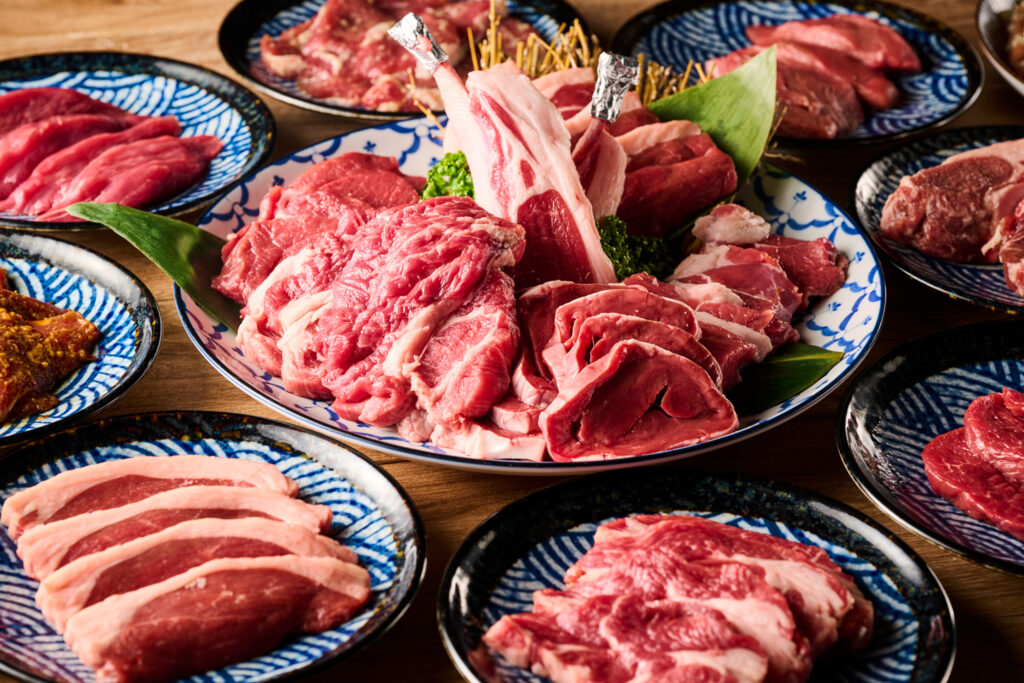
After handling many different kinds of sheep meat, one thing we have learned is that Jingisukan becomes much more interesting when you stop thinking of it as having “one flavor.”
- Lamb, hogget and mutton are different
- Different cuts from the same lamb taste different
- The amount and distribution of fat vary
- Origin, producer, rearing environment and individual animal all affect the impression
We have handled sheep from more than 10 domestic producers and suppliers, mainly in Hokkaido and also in the Tohoku region.
When you actually taste and compare them, the flavor cannot be reduced to “this is what domestic sheep tastes like” or “this is what lamb tastes like.”
Even within the same dish of Jingisukan, changing the sheep changes the taste.
We Do Not Want Sheep Meat to Remain Just an “Unusual Meat”
Even today, some people assume lamb is game meat.
That may also show how much less familiar sheep meat still is in Japan compared with beef, pork and chicken.
What we want to spread is not simply the idea of “trying a rare meat.”
Just like beef, pork and chicken, we want sheep meat to become something people can naturally choose by saying, “Let’s have lamb today.”
Jingisukan is a dish of grilled sheep meat, but the experience changes greatly depending on the sheep, the cut and the way it is cooked.
The more you move from simply knowing what the meat is to enjoying the differences, the more interesting Jingisukan becomes.
Where to Enjoy Jingisukan and Sheep Meat in Tokyo
As we have seen, Jingisukan is a dish built around grilled sheep meat, but its taste changes depending on the sheep, the cut, the fat and the way it is cooked.
Hitsuji Gumi operates two sheep-meat specialty restaurants in Tokyo: “Azabu no Hitsuji” and “Ichigaya no Hitsuji.”
For us, one of the best ways to enjoy sheep meat is not just to eat Jingisukan, but to compare different sheep and cuts and discover what you personally like.
Azabu no Hitsuji
A sheep-meat specialty restaurant in Azabu-Juban where you can enjoy Jingisukan.
Guests can grill the meat themselves and experience the flavor of the sheep and the differences between cuts.
Ichigaya no Hitsuji
A sheep-meat specialty restaurant serving Jingisukan in the Ichigaya and Kojimachi area.
The restaurant uses smokeless roasters, making it a convenient choice for dinner after work or group meals.