
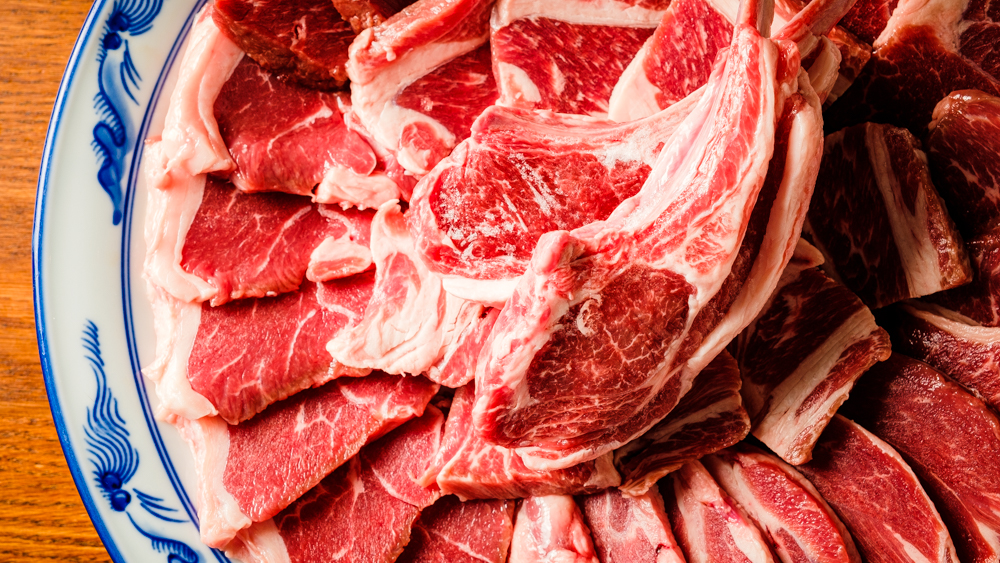
When people think of sheep meat, some may imagine that it has a strong smell or a very distinctive flavor.
Having handled many different kinds of sheep meat ourselves, we can say that sheep certainly has its own characteristic aroma.
But that aroma is not the same in every piece of sheep meat.
Lamb and mutton are different. Fatty cuts and lean cuts give different impressions. Even among lamb, the aroma and flavor can change with breed, feed and the individual animal.
That is why we do not think every aroma associated with sheep meat should simply be called an “unpleasant smell.”
In fact, learning to notice those differences is part of what makes sheep meat interesting.
In this article, we look at the difference between a natural sheep-like aroma and an undesirable odor, as well as what people trying sheep meat for the first time may find easier to choose—all from the perspective of a restaurant that handles sheep meat every day.
Sheep meat has its own characteristic aroma.
But the following are not the same thing:
- The natural aroma of the sheep meat itself
- The aroma released when the fat is grilled
- Undesirable odors that may result from storage or handling
Several compounds are known to contribute to the characteristic aroma of sheep meat, and the overall impression can also change with age, fat, cut, breed, feed and the individual animal.
In other words, “sheep meat” does not all smell the same.
If you are trying it for the first time, starting with lamb or a leaner cut with a relatively mild aroma can be a good option.
Lamb’s “Smell” Cannot Be Treated as One Thing
The first distinction we want to make is this:
A natural sheep-like aroma and an unpleasant odor caused by the condition of the meat are two different things.
Sheep meat has an aroma of its own.
Just as beef and pork smell different when grilled, sheep meat also has a characteristic aroma that belongs to the meat itself.
On the other hand, storage or handling can sometimes add undesirable odors that are separate from the meat’s original character.
If all of that is simply described as “sheep smell,” the natural character of the meat can end up being treated as a defect.
A Distinctly Sheep-Like Aroma Is Not Necessarily a Flaw
People who enjoy sheep meat often enjoy this aroma as part of the experience.
Some prefer the gentler aroma of lamb.
Some enjoy hogget, which can show a little more sheep-like character.
Others prefer the fuller flavor associated with mutton.
Preferences differ from person to person.
A milder aroma does not automatically mean higher quality, and a stronger aroma does not automatically mean lower quality.
For us, these differences are one of the reasons sheep meat is so interesting to compare.
Where Does Sheep Meat’s Distinctive Aroma Come From?
A number of compounds contribute to the characteristic aroma of sheep meat.
Among the compounds that have been studied are branched-chain fatty acids such as 4-methyloctanoic acid and 4-methylnonanoic acid.
But aroma is not determined by a single compound alone.
Research also indicates that multiple factors, including age, genetics, sex and nutrition, can influence the flavor of sheep meat.
The Sheep-Like Aroma Can Be More Noticeable in the Fat
Some branched-chain fatty acids associated with sheep meat aroma have been reported at higher levels in subcutaneous fat than in muscle.
This is something we also recognize when cooking meat in the restaurant.
Compared with lean meat alone, the sheep-like aroma can become more noticeable at the moment the fat is heated.
Even from the same sheep, the impression changes depending on how much fat there is and how it is distributed.
That is one reason different cuts can make people say, “This is milder than I expected,” or, “This has more of that sheep-like character.”
People Perceive Aroma Very Differently
Two people can eat the same meat and react very differently:
“Fragrant.”
“I like that sheep-like aroma.”
“It has a bit of a distinctive character.”
“I find it smelly.”
It also depends on how familiar someone is with sheep meat and what kind of sheep meat they first encountered.
So the word “smelly” by itself does not tell us whether the issue is the condition of the meat or simply a matter of personal preference.
Does Aroma Change Between Lamb, Hogget and Mutton?
Sheep meat is commonly categorized as lamb, hogget or mutton according to the animal’s stage of growth.
Age is one factor that can affect aroma, but age alone does not determine everything.
Fat, breed, feed, individual animal and cut all matter as well.
In practice, these factors combine to create the character of each sheep.
Lamb
For someone trying sheep meat for the first time, lamb is often the easiest place to start.
It tends to have a relatively mild aroma and tender texture.
We often hear reactions such as, “I thought sheep meat would have a much stronger taste,” after someone tries lamb.
Hogget
Hogget is sheep meat from an animal that has grown beyond the lamb stage.
Among the hogget we have handled, some retain much of lamb’s approachability while showing a little more sheep-like flavor and aroma.
That balance between lamb and mutton is part of what makes hogget interesting.
Of course, this does not mean every hogget is more aromatic than every lamb.
Mutton
With mutton, there are animals that show a fuller sheep-like flavor and aroma.
It would be a shame to reduce that simply to “mutton smells.”
As people become more familiar with sheep meat, some find that they prefer this deeper flavor.
Lamb, hogget and mutton are not a ranking from better to worse. They are different expressions of sheep meat.
Five Reasons Aroma Differs Even Among Sheep Meat
This is something we notice especially clearly when we actually handle the meat.
The same label of “lamb.”
The same label of “domestic sheep.”
Yet once you taste them, they are not all the same.
| Factor | How it relates to aroma |
|---|---|
| Growth stage | Lamb, hogget and mutton can show different aroma tendencies |
| Fat and cut | The amount and distribution of fat change how the aroma is perceived |
| Breed and individual animal | Even lambs in the same category can differ in flavor and aroma |
| Feed and rearing environment | One of several factors that shape the flavor of sheep meat |
| Storage and handling | Can introduce unpleasant odors that are different from the meat’s natural aroma |
1. Growth Stage
Lamb, hogget and mutton can differ in their aroma profiles.
But it is not as simple as saying “younger always means milder” or “older always means smellier.”
Age is only one factor among many.
2. Fat and Cut
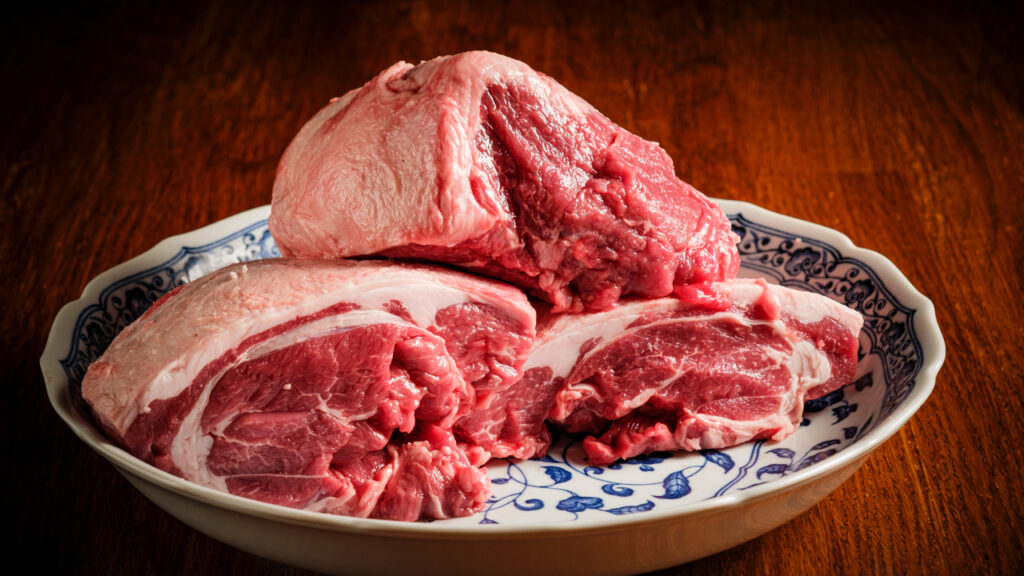
Cuts such as shoulder loin, leg and rump contain different amounts of fat, even when they come from the same sheep.
And when the amount of fat changes, the aroma released during grilling changes as well.
Someone who wants a strong sense of sheep-like character may choose differently from someone who wants to start with a milder cut.
Even within the same animal, the cut makes a difference.
3. Breed and Individual Animal
To date, we have handled sheep meat from more than 10 domestic producers and suppliers.
One thing that becomes clear is this:
Even under the same label of “domestic lamb,” the flavor and aroma are not all the same.
The way the fat is distributed, the way the sheep-like aroma appears, and the flavor of the lean meat all vary.
Each animal is different.
That is why we do not use simple rules such as “domestic sheep does not smell” or “imported sheep has a stronger taste.”
4. Feed and Rearing Environment
What the sheep eats and how it is raised can also influence flavor.
But it is not as simple as saying:
“Grass-fed sheep smells stronger.”
“This feed means there will be no strong flavor.”
No single condition decides the final taste.
Breed, age, fat and individual differences all overlap to create the character of the sheep.
5. Storage and Handling
Storage and handling should be considered separately from the sheep’s natural aroma.
Depending on the condition of the meat, undesirable odors that are different from its original character can sometimes appear.
But that does not mean:
“Frozen meat smells bad.”
“Fresh lamb has no smell.”
“Fresh meat is odorless.”
Sheep meat naturally has a sheep-like aroma.
The important thing is not to confuse the character of the meat itself with an unpleasant odor caused by its condition.
What Should You Choose If You Find Sheep Meat’s Aroma Strong?
“I want to try sheep meat, but I’m a little worried that the flavor will be too strong.”
If that sounds familiar, your first choice can make a big difference to your impression.
There is no need to start with meat that shows the strongest sheep-like character.
Start with Lamb
Lamb tends to have a relatively mild aroma.
For many people trying sheep meat for the first time, it is an approachable place to begin.
Start with Leaner Cuts
If the aroma of fat concerns you, starting with a leaner cut is another option.
Even within the same lamb, changing the cut can change the impression considerably.
Do Not Overcook It
“If I’m worried about the flavor, I should cook it thoroughly.”
That is an easy mistake to make.
But overcooking drives out moisture and makes the meat tougher, which can make it harder to appreciate what is good about the sheep meat in the first place.
Watch the thickness and cut, and avoid applying more heat than necessary.
The way you cook it can change your impression of sheep meat too.
Enjoy Sauces and Condiments Too
Jingisukan is not a dish that ends with the meat alone.
Sauce, garlic and condiments are also part of the experience.
Changing the way you season the meat to suit its character is part of the fun.
The idea is not to “hide the smell,” but to layer flavors in a way that suits the individuality of the meat.
That is a much more enjoyable way to think about it.
What “I Don’t Like Lamb” Can Mean at a Lamb Specialist
At the restaurant, we sometimes hear guests say, “I don’t really like sheep meat.”
When we ask a little more, we sometimes find that what they mean is:
“The mutton I ate years ago had a very strong aroma.”
“I didn’t like the sheep meat I had before.”
Then they try a different lamb or a different cut and say:
“I can eat this.”
“This is different from the sheep meat I imagined.”
Of course, some people simply do not enjoy the natural aroma of sheep meat, and that is a matter of preference.
But there is one thing we want to communicate:
One plate of sheep meat is not the whole story.
Lamb, hogget, mutton.
Lean cuts, fattier cuts.
Domestic sheep, imported sheep.
After handling many different kinds of sheep, we feel there is simply too much variation to summarize all of it with one phrase: “sheep meat.”
That is why we believe eating at a sheep-meat specialty restaurant is about more than just eating Jingisukan.
It is also about finding the sheep flavor you personally enjoy.
Summary|Sheep Meat Is Something to Enjoy for Its Aroma Too
Sheep meat has an aroma that is uniquely its own.
But it is not as simple as saying, “It smells because it is sheep meat.”
Age, fat, cut, breed, feed and the individual animal all matter.
Change those conditions, and both aroma and flavor can change.
You can start with approachable lamb.
Then try hogget or mutton.
You can compare lean meat with fattier cuts.
The more you learn about sheep meat, the more interesting it becomes to decide what kind you want to eat next.
The differences between sheep are easier to understand when you actually taste them than when you only read about them.
Hitsuji Gumi, the sheep-meat specialty brand behind “Azabu no Hitsuji” and “Ichigaya no Hitsuji,” wants sheep meat to become more than an “unusual meat”—something people can choose more naturally in everyday life.
Whether you think, “I might not like sheep meat,” or, “I want something with even more sheep-like character,” we hope you will experience those differences for yourself.
Azabu no Hitsuji
A sheep-meat specialty restaurant in Azabu-Juban where you can enjoy Jingisukan.
Guests can grill the meat themselves and experience the flavor of the sheep and the differences between cuts.
Ichigaya no Hitsuji
A sheep-meat specialty restaurant serving Jingisukan in the Ichigaya and Kojimachi area.
The restaurant uses smokeless roasters, making it a convenient choice for dinner after work or group meals.
References
- Japan Meat Information Service Center, “Sheep Meat”
- Watkins PJ, et al. “Branched chain fatty acids in the flavour of sheep and goat milk and meat: A review.” Small Ruminant Research, 2021.
- Brennand CP, Lindsay RC. “Distribution of volatile branched-chain fatty acids in various lamb tissues.” Meat Science.
- Watkins PJ, et al. “Effect of branched-chain fatty acids, 3-methylindole and 4-methylphenol on consumer sensory scores of grilled lamb meat.” Meat Science.