
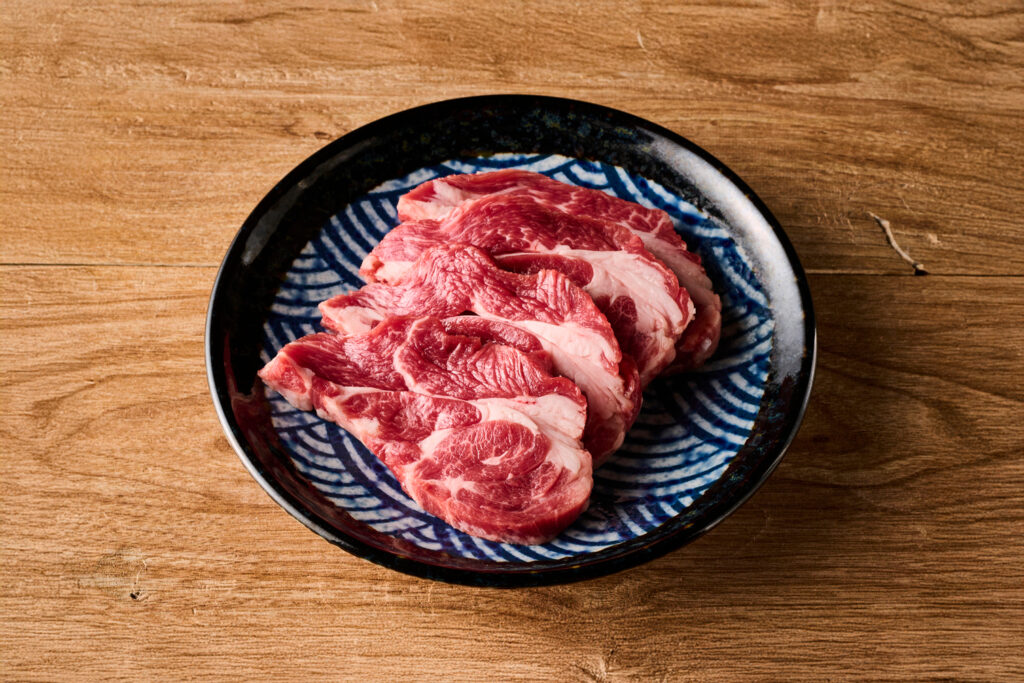
“Does ‘fresh lamb’ mean lamb you can eat raw?”
“How is it different from ordinary lamb?”
“Is fresh lamb better than frozen lamb?”
You may see the term “fresh lamb” on Jingisukan restaurant menus or at butcher shops, but what it actually means is not always as obvious as it sounds.
In general, the term is often used for lamb that is distributed under chilled conditions without first being frozen.
However, from our conversations with lamb suppliers, we have found that the way the term is used is not completely standardized across retailers, restaurants and distributors.
That is why, at Hitsuji Gumi, we use the more specific term “never-frozen lamb” when referring to lamb that we know has never been frozen.
The Australian lamb we handle is shipped under chilled conditions and reaches our restaurants without going through a freezing process.
In this article, we explain what “fresh lamb” generally means, what happens to meat during freezing and thawing, and what we notice from actually handling never-frozen lamb at a lamb specialty restaurant.
What does “fresh lamb” mean? It does not mean lamb for eating raw
The first thing to understand is that “fresh” does not mean the lamb is intended to be eaten raw.
“Lamb” is a term related to the animal’s stage of maturity.
In general, lamb that is distributed chilled without first being frozen is often described as fresh lamb.
At Hitsuji Gumi, however, we do not treat the term “fresh lamb” as an absolute definition meaning that the meat has definitely never been frozen.
From our conversations with suppliers, we know that the term can be used somewhat differently depending on the business or distribution channel.
That is why, when talking about the lamb we actually serve, we use the more specific expression “never-frozen lamb.”
In this article, we therefore distinguish between:
“fresh lamb” as a commonly used term
and
the never-frozen lamb that Hitsuji Gumi actually handles.
What is the difference between fresh and frozen lamb?
The biggest difference is whether the meat goes through a freezing and thawing process during storage and distribution.
| Comparison | Chilled / never-frozen lamb | Frozen lamb |
|---|---|---|
| Main distribution condition | Chilled | Frozen |
| Freezing and thawing | None | Yes |
| Storage life | Relatively short | Suitable for longer storage |
| Moisture and texture | Not affected by a freeze-thaw cycle | May change depending on conditions |
| Factors affecting condition | Temperature control, storage and the meat itself | Freezing speed, storage temperature, storage time, packaging and thawing method |
However, this does not mean:
never-frozen = good, frozen = bad.
Freezing is an important technology that allows meat to be stored for longer periods and transported reliably over long distances.
With appropriate freezing, temperature control and thawing methods, the effect on meat quality can also be reduced.
At the same time, the freezing and thawing process can cause changes in moisture and muscle structure.
What matters is not simply whether the meat is chilled or frozen, but:
what kind of meat it is and how it has been handled throughout storage and distribution.
What happens to meat during freezing and thawing?
One of the easiest ways to understand the difference between fresh and frozen lamb is through moisture.
Meat contains a large amount of water.
When meat is frozen, some of that water forms ice.
When frozen meat is thawed, some moisture may leave the meat depending on how it was frozen and stored.
This liquid is commonly referred to as drip.
Ice crystals and moisture in meat
Ice crystals form inside meat during freezing.
Their size and the way they form are affected by factors such as:
- freezing speed
- storage temperature
- storage duration
- temperature fluctuations during storage
Ice crystal formation and conditions during frozen storage can affect muscle structure and the meat’s ability to retain moisture, which may lead to more moisture being released during thawing.
A greater amount of drip can affect texture
When more moisture leaves the meat, it can affect how juicy the meat feels when eaten.
Depending on the condition of the meat, this may result in:
- less perceived juiciness
- a slightly drier texture
- changes in mouthfeel
Research comparing chilled and frozen lamb has also reported differences in moisture loss after frozen storage.
However, not every piece of frozen meat behaves in the same way.
Was it frozen quickly?
How long was it stored?
Were there temperature fluctuations?
How was it thawed?
All of these conditions can affect the result.
It would therefore be inaccurate to say that:
“Frozen meat always becomes dry.”
or
“Frozen lamb always releases a lot of drip.”
The red drip is not simply “blood”
When red liquid appears as meat thaws, it can look like blood.
However, it is not accurate to describe thaw drip simply as blood.
The liquid released during thawing mainly contains moisture that was present within the muscle, together with proteins and other components.
What matters is not the red color itself, but how much moisture has left the meat during thawing.
Greater moisture loss can affect the juiciness and texture of the meat.
Storage conditions can also lead to drying and oxidation
One major advantage of frozen meat is that it can be stored for longer periods.
However, depending on storage duration, packaging and temperature fluctuations, the surface of the meat may dry out and fats or proteins may oxidize.
What is commonly called freezer burn is one possible result.
Again, this does not mean that freezing automatically causes these changes.
The final condition of the meat depends not only on freezing itself, but also on how it is stored afterward.
What we notice from actually handling never-frozen lamb
So far, we have looked at the general effects of freezing and thawing.
From here, we want to talk about what we notice from actually handling never-frozen lamb at Hitsuji Gumi.
The Australian lamb we use is shipped under chilled conditions and reaches us without ever being frozen.
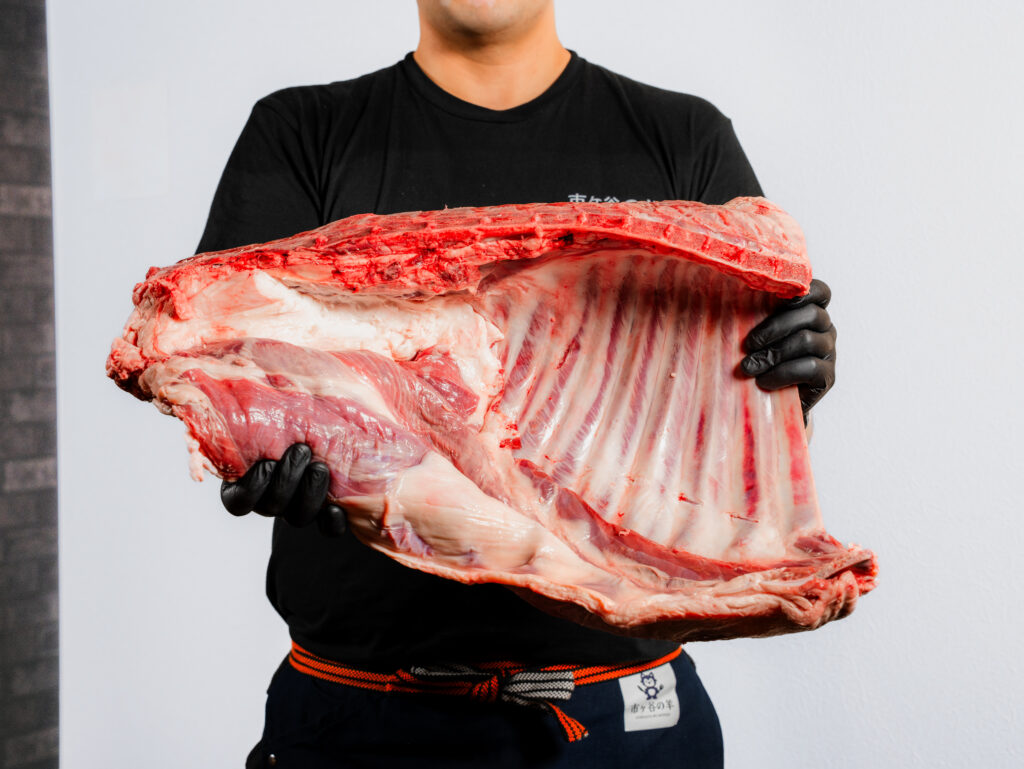
When we trim, cut and handle the meat, we find it easier to feel its:
firmness, moisture, elasticity and the condition of its fat.
Because it has not gone through a freeze-thaw cycle, the condition of the meat as it arrives is relatively easy to experience directly.
This is one of the characteristics we notice through actually working with never-frozen lamb.
However, never-frozen lamb is not all the same.
Different cuts have different textures.
Even the same cut can vary from animal to animal in muscle development and fat.
Season and rearing conditions can also affect the character of the meat.
When you actually work with large sections of sheep, those differences become very clear.
That is why, at Hitsuji Gumi, we focus less on the idea that:
“fresh lamb must be delicious”
and more on understanding the meat in front of us.
Related article
Lamb Cuts Explained | Shoulder, Loin, Leg, Rump and More: Flavor & Texture Guide
Learn more about how shoulder, loin, leg, rump and other lamb cuts differ in flavor and texture.
Does fresh lamb smell less? Understanding lamb aroma
You may sometimes hear that:
“Fresh lamb does not smell.”
Or that:
“Frozen lamb smells stronger.”
But lamb aroma is not determined by freezing alone.
Many factors are involved, including:
- whether the meat is lamb, hogget or mutton
- the amount and condition of fat
- the individual animal
- feed
- storage
- cooking
Sheep meat also naturally has its own distinctive aroma.
At Hitsuji Gumi, we think it is important to distinguish between the characteristic aroma of sheep meat and an unpleasant off-odor caused by poor condition.
Having aroma does not in itself mean that the meat is low quality.
In fact, when lamb, hogget and mutton are compared side by side, differences in aroma can become part of what makes sheep meat interesting.
Related article
Why Is Lamb Said to Smell? A Lamb Specialist on Natural Aroma vs. Unpleasant Odors
Learn more about the difference between lamb’s natural aroma and unpleasant off-odors.
Is fresh lamb more delicious? What matters to Hitsuji Gumi
After reading this far, you may still wonder:
“So is fresh lamb actually better?”
At Hitsuji Gumi, we do not believe that fresh lamb is automatically more delicious.
Whether lamb has never been frozen is useful information when assessing its condition.
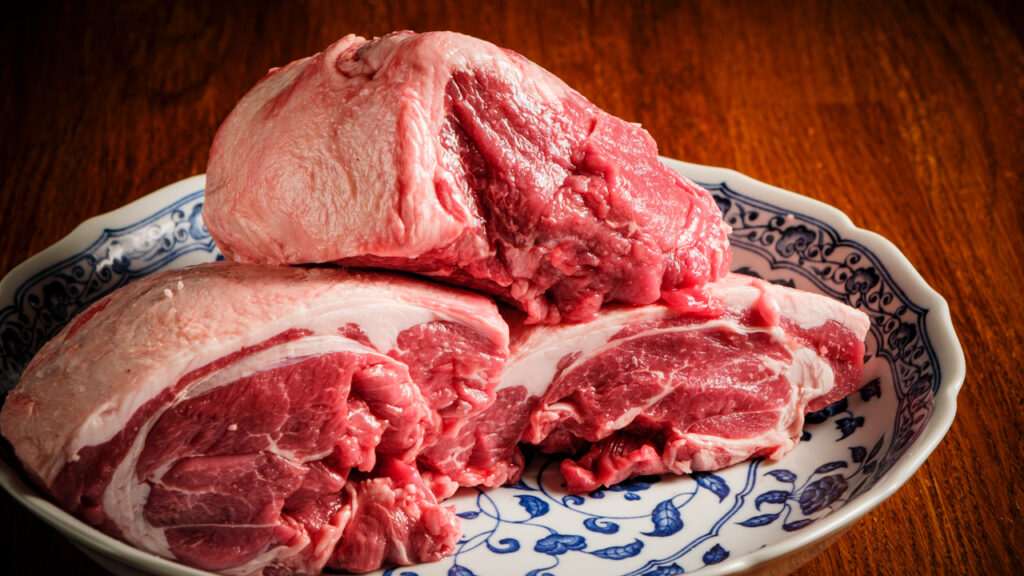
But the final eating quality is not determined by that alone.
When we look at meat, we pay attention to:
- the meat itself
- the individual animal
- the cut
- the amount and condition of fat
- storage
- trimming
- slicing
- cooking
Even within never-frozen lamb, different cuts have different textures and different balances of lean meat and fat.
The same cut can also vary from animal to animal.
Likewise, properly frozen lamb that has been well temperature-controlled and correctly thawed can have qualities of its own.
Freezing is also an important technology that allows lamb from different regions to be distributed consistently.
So we do not see it as:
never-frozen is superior
and frozen is inferior.
Lamb is more complex than that.
A label alone cannot tell you everything
This is not unique to lamb.
It is difficult to judge an ingredient simply from a label.
Rather than looking only for the words “fresh lamb,” it is worth asking:
Where did the meat come from?
How was it stored?
Which cut is it?
How was it trimmed and sliced?
And how will it be cooked?
Once you start looking at these details, you begin to see how different two pieces of lamb can be.
Hitsuji Gumi does not handle never-frozen lamb simply because the phrase sounds appealing.
We want to see and touch the meat as it arrives, understand its condition and serve it accordingly.
Never-frozen lamb is one part of that approach.
Comparing different lamb makes the differences easier to understand
Sheep meat becomes more interesting when you compare different cuts and types rather than eating only one.
Tenderness.
Fat.
The flavor of the lean meat.
Aroma.
Elasticity.
Even within lamb, there are many differences.
Instead of deciding that:
“Fresh lamb tastes like this,”
try asking:
“How is this piece different?”
That is one of the best ways to discover what makes lamb interesting.
Summary: Look at the condition of the meat, not only the words “fresh lamb”
In general, “fresh lamb” is often used to describe lamb distributed under chilled conditions rather than frozen.
However, the term is not necessarily defined in exactly the same way by every retailer, restaurant or distributor.
At Hitsuji Gumi, we use the more specific term “never-frozen lamb” for lamb that we know has never been frozen.
Depending on the conditions, freezing and thawing can affect ice crystal formation, drip loss, water retention, drying and oxidation.
At the same time, the degree of change varies depending on freezing method, storage and thawing.
So it would be too simple to say:
fresh lamb is always better
or
frozen lamb is not good.
What we notice when handling never-frozen lamb is that its firmness, moisture, elasticity and the condition of its fat are relatively easy to experience as the meat arrives.
But the final eating quality depends on much more than whether the meat has been frozen.
The animal itself, the cut, fat, storage, slicing and cooking all matter.
Once you understand what “fresh lamb” means, look one step further.
What kind of sheep is it?
Which cut?
What does the texture feel like?
Comparing them at the table is where lamb becomes even more interesting.
Azabu no Hitsuji
A lamb specialty restaurant in Azabu-Juban, serving Jingisukan and a variety of sheep meat.
Ichigaya no Hitsuji
A lamb specialty restaurant in the Ichigaya and Kojimachi area, serving Jingisukan and a variety of sheep meat.