
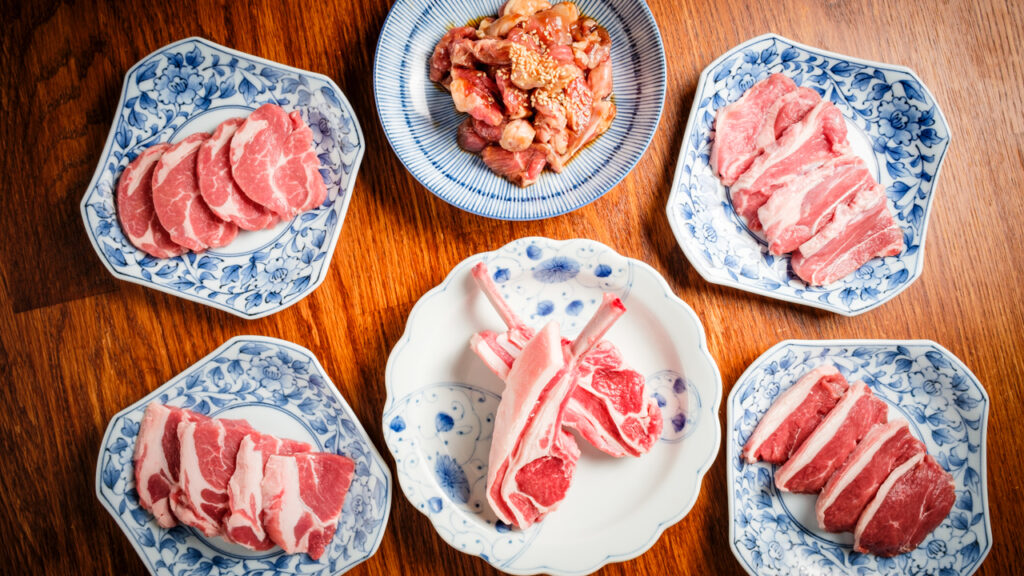
“Do different cuts of lamb really taste that different?”
It is a question we hear often when talking with guests about lamb.
Compared with beef, the names of individual lamb cuts are not as familiar to many people, so lamb is sometimes thought of as one single type of meat.
In reality, shoulder, loin, leg, rump, foreleg and belly can differ in the amount of fat, tenderness and the way they feel when you bite into them.
Even within the same animal, some cuts are better for enjoying the richness of the fat, while others let you taste the lean meat more clearly.
And even when the cut has the same name, the meat is not exactly the same every time.
Hitsuji Gumi, the lamb specialist brand behind Azabu no Hitsuji and Ichigaya no Hitsuji, works not only with imported lamb but also with Japanese-raised lamb, hogget and mutton.
When we buy Japanese-raised sheep by the whole animal, some arrive bone-in and are deboned and trimmed by our team.
In this article, we explain the main lamb cuts and their differences in flavor and texture, along with what we have learned by actually handling whole animals and comparing one cut with another.
How Do Lamb Cuts Differ? A Quick Overview
Here is a simple overview of some of the main cuts.
| Cut | General characteristics | Good for people who prefer |
|---|---|---|
| Shoulder | A balance of lean meat and fat, with plenty of meat flavor | Both richness and lean meat |
| Loin | Relatively tender with a fine texture | Softer, more tender lamb |
| Leg | Often leaner, with the flavor of the meat coming through clearly | Leaner lamb |
| Rump | Mostly lean, with a good balance of tenderness and flavor | Lean meat with some tenderness |
| Foreleg | A meatier texture with plenty of savory flavor | A more substantial bite |
| Belly | More noticeable fat and richness | Richer, fattier lamb |
These are only general tendencies.
The character of lamb is not determined by the cut alone.
Age and stage of growth—lamb, hogget or mutton—also matter, as do breed, how the animal was raised, individual variation and the amount of fat.
The way cuts are named and separated can also vary somewhat depending on origin, supplier and distribution standards.
Rather than asking which cut is “the best,” we think lamb becomes more interesting when you start asking which cut you personally like most.
That is how we look at it.
Shoulder and Loin | Richness, Fat and Tenderness
Shoulder
Shoulder comes from the area around the shoulder and upper back.
It is a cut where you can often enjoy both lean meat and fat. When there is a good amount of fat, grilling brings out both its savory aroma and the flavor of the meat.
It also has enough presence to work especially well for jingisukan and is an approachable choice for both newcomers and people who already enjoy lamb.
But one shoulder is not exactly the same as another.
The thickness of the fat, size of the muscle, direction of the connective tissue and balance between lean meat and fat can all vary from animal to animal.
Some shoulders carry a generous layer of fat, while others feel noticeably leaner.
That is why we may adjust the trimming and thickness depending on the condition of the meat in front of us.
Maybe you want some richness from the fat.
But you still want to taste the meat itself.
Shoulder is an easy cut to understand if that sounds like your preference.
Loin
Loin comes from the back and tends to have a relatively tender, fine texture.
People who are new to lamb sometimes taste it and say,
“I didn’t realize lamb could be this tender.”
Racks and lamb chops, which are often served bone-in, also come from the back section.
Because loin is naturally tender, however, overcooking can hide some of what makes it appealing.
A thick piece and a thin slice will also cook differently.
It helps to look not only at the name of the cut, but also at the thickness and amount of fat on the piece you are actually grilling.
Shoulder and loin alone can feel quite different in both richness and tenderness.
If you have the chance to eat several cuts together, comparing these two is an easy way to start discovering what you prefer.
Leg and Rump | Cuts for Enjoying Leaner Flavor
Leg
Leg comes from the rear leg of the animal.
Compared with shoulder, many parts of the leg are relatively lean, so the flavor of the meat itself tends to come through clearly.
If you prefer the flavor of lean meat over richer fat, leg may be a good choice.
However, “leg” is not one single uniform muscle.
A large piece of leg contains several different muscles, each with its own tenderness, thickness and direction of muscle fibers.
That means that when we work from a whole animal, we do not simply treat the entire leg as one piece and cut everything the same way.
We separate the muscles and look at the direction of the fibers before deciding how to cut them.
With leaner meat in particular, the direction and thickness of the cut can make a noticeable difference to the eating experience.
Rump
Rump comes from the area around the hip and rear of the animal.
It is mostly lean but can still feel relatively tender, giving it a good balance of meat flavor and softness.
Depending on the condition of the meat, rump can also work well when cut a little thicker.
This is another cut where differences between individual animals become obvious.
Even among lambs, there are times when we think,
“This one is quite small.”
or,
“This one has developed a lot more muscle.”
The size of the cut itself can vary that much.
For that reason, our goal is not simply to make every piece exactly the same shape and thickness.
We look at the actual meat and decide what thickness will bring out its best qualities.
Even if you know you prefer lean lamb, leg and rump can feel quite different in tenderness and texture.
Comparing cuts within the same “lean” category is another way to discover what kind of lamb you like.
Foreleg and Belly | Lamb Is About More Than Tenderness
Foreleg
Foreleg comes from the front leg.
Because it is an area the animal uses frequently, it tends to have a meatier texture than loin.
That extra texture can also make the flavor of the lamb feel more pronounced as you chew.
Foreleg is not one uniform piece of meat either.
Several muscles come together in the area, so we separate and trim them while looking at connective tissue and membranes.
Simply slicing everything thinly does not automatically make it better.
Depending on the meat, leaving a little more thickness can actually make the characteristic texture of the cut more enjoyable.
Belly
Belly comes from the underside and around the rib area.
It tends to carry more fat and can feel very different from a leaner cut such as leg.
For people who enjoy the richness of lamb fat, it can be a particularly satisfying cut.
It is also a part of the animal where individual variation is easy to see.
If the fat is thick, how much should we leave?
If there is too much in one area, how much should we trim?
Removing all of it is not always the answer, and neither is leaving everything untouched.
We trim it while thinking about how the lean meat and fat will taste together in one bite.
Foreleg and belly make it especially clear that tenderness is not the only measure of good lamb.
Looking at the Whole Animal Shows That Even the Same Cut Is Never Exactly the Same
We sometimes buy Japanese-raised sheep by the whole animal.
When you actually work with a whole animal, you begin to see not only the differences between cuts, but also the differences from one animal to another.
Naturally, the amount of each cut is not equal.
There is only a limited amount of shoulder, loin, leg and rump on each animal.
You cannot simply take more of the most popular cut.
If the shoulder sells first, the rest of that animal still has other cuts that need to be used well.
That means the restaurant has to think about questions such as:
How should we cut this part?
How should we recommend that guests grill it?
What should we serve alongside it?
How can we best show what makes this particular cut good?
Even within the same shoulder or leg, size, fat and muscle structure vary from animal to animal.
The name of the cut may be the same, but the piece of meat in front of us is never exactly the same.
That becomes very clear when you work with whole animals one by one.
Looking at the meat from a whole animal also reminds us that the most popular cuts are not the only ones worth eating.
At Hitsuji Gumi, we look at the condition of each animal and try to serve the different cuts in ways that let guests enjoy those differences.
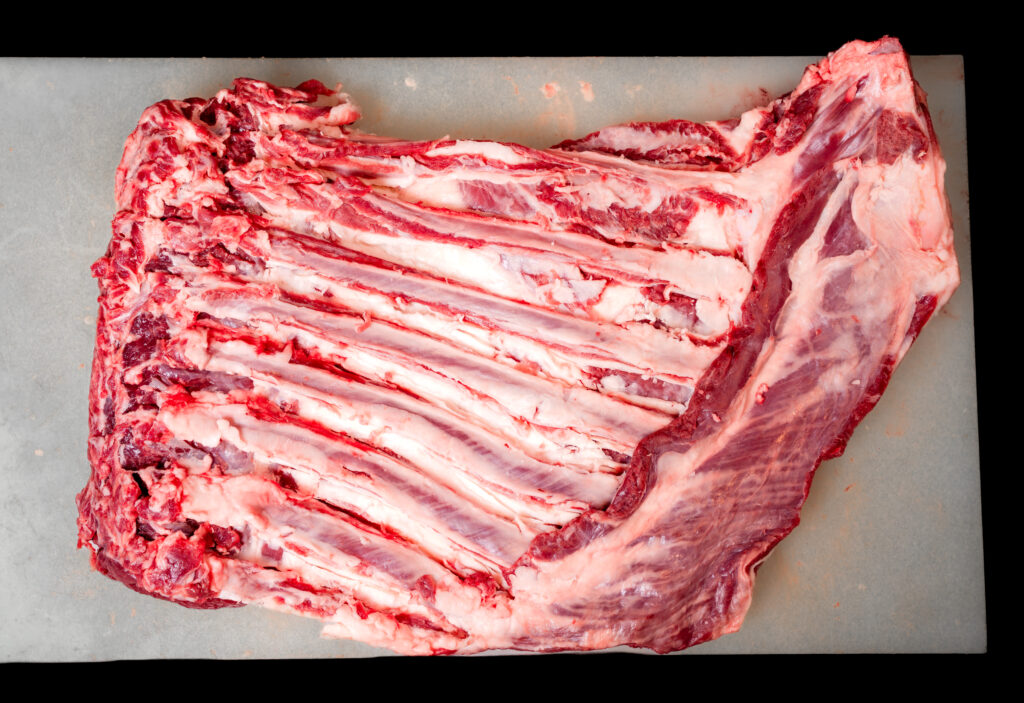
Deboning, Trimming and Cutting Bring Out the Best in Each Cut
When Japanese-raised sheep arrive bone-in, one of the first jobs is deboning—removing the meat from the bones.
It is not simply a matter of taking the bones out.
The knife has to follow the shape of the bone so that the meat can be removed as cleanly as possible.
Leaving too much meat on the bone lowers the usable yield.
At the same time, taking longer is not automatically better.
Because temperature control also matters while the meat is being handled, the work requires both accuracy and speed.
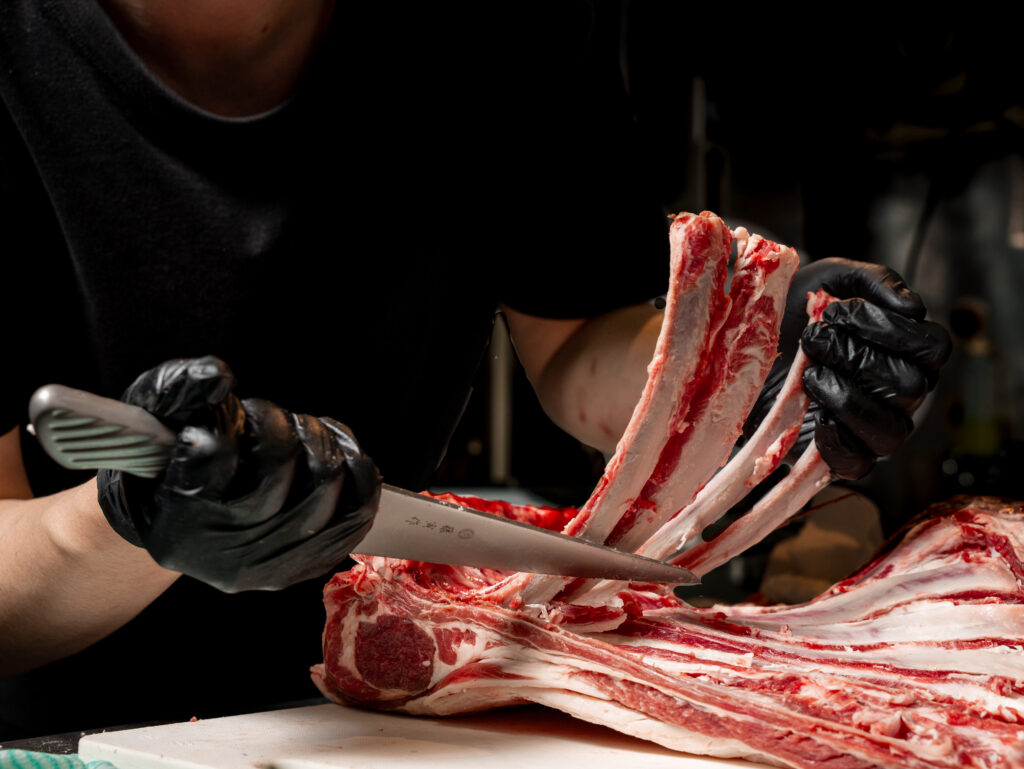
After deboning, the work continues:
remove the bones
→ separate the muscles and cuts
→ trim connective tissue and membranes
→ cut the meat to the size and thickness used for serving
Working this way makes differences easier to see.
“This part of the leg is different from that one.”
“The fibers run in this direction.”
“This animal has a particularly large version of this cut.”
Not every piece of lamb handled by Hitsuji Gumi is deboned in-house every time.
Depending on the supplier and the form in which it arrives, some meat is already deboned and separated into individual cuts.
But having experience working from bone-in whole animals helps us understand where each cut comes from and how the muscles connect.
That understanding also affects the final decision about how to cut the meat for the table.
Even two pieces of shoulder can differ in thickness, fat and muscle structure.
If the meat is naturally tender, we may leave it a little thicker so the texture can be enjoyed.
If the fibers of a leaner cut are more pronounced, we pay closer attention to the direction of the cut.
If a cut carries more fat, we shape it so that the lean meat and fat can be eaten together comfortably.
We do not cut the meat simply by looking at the name of the cut. We cut the piece of meat that is actually in front of us.
That is one of the principles we value when working with lamb.
Knowing the Cuts Makes Jingisukan More Interesting
You do not need to memorize every lamb cut before enjoying it.
After eating lamb a few times, you may gradually start to notice your own preferences.
“I like cuts with more fat.”
“I prefer leaner meat.”
“I like softer cuts.”
“I actually enjoy a little more bite.”
Shoulder gives you both lean meat and fat.
Loin offers tenderness.
Leg highlights lean meat.
Rump balances lean flavor and softness.
Foreleg gives a meatier bite.
Belly brings richer fat.
They can all come from the same animal, yet each feels different.
There is nothing wrong with eating just one cut, but the differences become much easier to understand when several cuts are served side by side.
“I liked this one.”
“Next time I want to try a different cut.”
Discovering your own preferences this way is part of what makes jingisukan so enjoyable.
Azabu no Hitsuji and Ichigaya no Hitsuji also serve a variety of lamb cuts depending on what is available at the time.
If this article has made you curious about how the cuts actually taste side by side, try comparing a few of them in person.
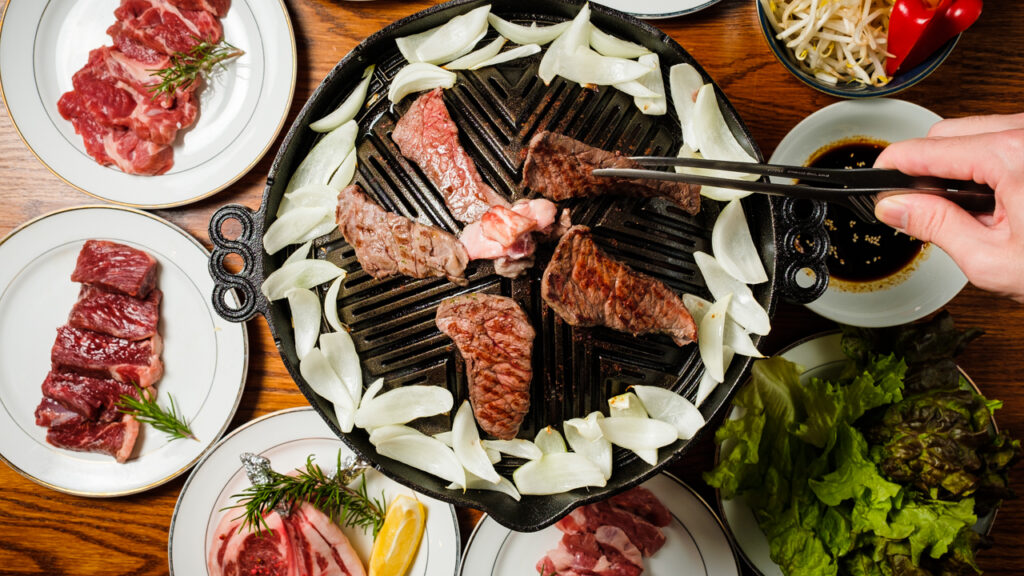
Summary | Find the Lamb Cuts You Like, Not the One “Best” Cut
Lamb includes many different cuts, including shoulder, loin, leg, rump, foreleg and belly.
Each one differs in fat, tenderness, texture and the way its flavor comes through.
And even within the same cut, size and fat can vary from animal to animal.
That is why we do not judge meat by the name of the cut alone.
We look at the size of the animal, the meat itself, the fat and the muscle structure before deciding how to cut it.
As a diner, you do not need to choose only by asking,
“Which cut is the most tender?”
or,
“Which cut is the best?”
Maybe you prefer richer meat.
Maybe you prefer lean meat.
Maybe tenderness matters most to you.
Or maybe you enjoy a cut with a little more bite.
As you compare different cuts, your own preferences gradually become clearer.
Lamb is not one single flavor.
Even one animal contains many different eating experiences.
Finding the cuts you personally enjoy is another way to appreciate lamb.
Once you know what you like, the next time you eat jingisukan becomes more interesting too.
If a particular cut has caught your attention, try tasting it and comparing it for yourself.
Azabu no Hitsuji
Enjoy a Range of Lamb Cuts in Azabu-Juban
Azabu no Hitsuji is a jingisukan and lamb specialist restaurant just a 1–2 minute walk from Azabu-Juban Station.
From à la carte dishes to courses, you can enjoy a variety of lamb depending on your mood that day.
Ichigaya no Hitsuji
Enjoy the Differences Between Lamb Cuts in Ichigaya and Kojimachi
Ichigaya no Hitsuji is a jingisukan and lamb specialist restaurant about a five-minute walk from Ichigaya and Kojimachi.
Try different lamb dishes and discover how texture and character change from cut to cut.